Ingredients
- ½ cup coarse salt
- 1 napa cabbage, cut into chunks
- 2 jujube (Chinese dates), or more to taste (Optional)
- 5 ½ cups water, divided
- 3 tablespoons salted fermented shrimp (saewujeot)
- 2 scallions, cut into 1-inch pieces
- 6 cloves garlic, sliced
- 2 tablespoons sliced fresh ginger
- ½ Korean radish, cut into matchsticks
- 5 chestnuts, cut into thin strips
- ½ pear, cut into matchsticks
- 2 carrots, cut into matchsticks
- 1 red chile pepper, seeded and thinly sliced, or more to taste
- 4 teaspoons brown sugar
- 2 teaspoons salt
Why This Dish Is So Satisfying
Kitchen Advice
- Soak the cabbage thoroughly in salt water to ensure it softens evenly.
- Add plenty of pear or apple to balance the savory and tangy flavors with natural sweetness.
Step 1
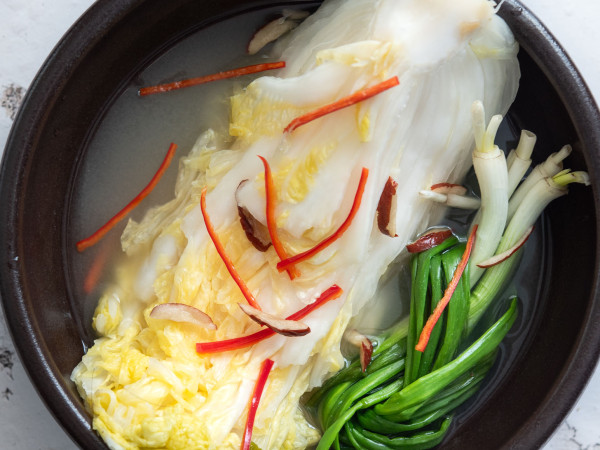
Dissolv half a cup of coarse salt in a large bowl of water. Submerge the cabbage in the salty water and let it soak for anywhere between 12 and 24 hours. Once it’s done soaking, drain the cabbage, give it a good rinse, and squeeze out as much water as you can.
Step 2
While the cabbage is soaking, soak the jujube in a small bowl of water for about 10 to 15 minutes. After that, drain, remove the pits, and slice them thinly.
Step 3
Blend half a cup of water with the salted shrimp, scallions, garlic, and ginger in a food processor until it turns into a smooth paste. Pour this mixture into a large bowl, then add the sliced jujube, radish, chestnuts, pear, carrots, red and green chile peppers, brown sugar, and two teaspoons of salt. Stir in five cups of water and mix everything together.
Step 4
Add the cabbage to the bowl and toss it all until the cabbage is well coated with the mixture. Pack the cabbage and its juices tightly into an airtight jar, making sure to pour in any leftover liquid from the bowl.
Step 5
Seal the jar and leave it out at room temperature for a day or two to start fermenting. Once you see it beginning to bubble and develop that tangy flavor, move it to the fridge to slow down the fermentation.